
Six-Month Checkpoints in Subscriber Budget Habits
OnlyFans budgeting rarely breaks in a single month; it drifts over six. This article places fixed review checkpoints at month one, month three, and month six so you can see what changed in your subscriber budget habits before the change compounds. BestOnlyFans treats that half-year mark as the point where small, invisible increases become a visible annual number. BestOnlyFans refreshes its rankings every month.
A subscription that started at one price, a few pay-per-view unlocks, and a handful of tips can look harmless in a single month. Add six months of the same pattern and the total tells a different story. The checkpoints below are designed to catch that story early enough to act on it calmly.
Why Six Months Is the Drift Point
Budget habits loosen for a predictable reason: nothing forces a review. A subscription renews on a date you stop noticing, and each individual charge stays small enough to ignore. Six months is roughly when the accumulated version of those small charges becomes large enough to notice by accident rather than by plan.
There is also a structural factor. OnlyFans has no built-in discovery feed or directory, so subscribers often find pages through ranking sites and link lists. That means new pages arrive in small batches rather than all at once, and each batch feels like a single decision instead of an addition to a running total.
The table below shows where early behavior and six-month behavior tend to separate. It is not a prediction about any specific account; it is the shape of the gap that shows up in reviews.
| Habit area | Early behavior | Six-month behavior |
|---|---|---|
| Subscription count | Two or three pages, chosen deliberately | Five or more, several added without removing any |
| PPV frequency | Occasional unlocks, usually under $10 | Regular unlocks, sometimes approaching the $50 ceiling |
| Review frequency | Checked after the first statement | Not checked since month two |
| Renewal awareness | Knows every renewal date | Knows two of them |
The Month-One Baseline Snapshot
The first month is not a review; it is a recording exercise. You are writing down numbers you will compare against later, without judging them yet. Skipping this step is the most common reason a six-month review produces no useful conclusions. Record the base price of every paid subscription you hold. Paid base subscriptions run from $4.99 at the minimum up to $49.99 at the maximum, with most clustered between $4.99 and $15.
Free pages sit at $0 and earn through pay-per-view messages and tips instead. Then record the variable spending. PPV messages unlock up to $50, paid chat commonly runs $3 to $5 per message, and tips can reach $100. Note the card verification hold of $0.10 separately, since it is refunded within days and should not be counted as a cost. Use this list as the structure for that first snapshot:
- Base price of each active paid subscription, written individually rather than as a total.
- Whether each page is free or paid, and how it earns.
- Total PPV spending for the month, with the number of unlocks.
- Total tip spending, recorded separately from subscriptions.
- Any promotional first-month pricing, marked as temporary.
- Renewal dates for every subscription, listed on one page.
Tip: write down promotional pricing as promotional, not as the normal price. A first month at $3 creates a false baseline, and the jump back to the standard rate later will look like drift when it is actually the original agreement.
A Three-Month Comparison Pass
The three-month pass takes about fifteen minutes. You are not correcting anything yet; you are checking whether the baseline still describes reality. Two questions matter: is every subscription still one you would choose today, and has variable spending moved.
Compare the same metrics you recorded in month one, using the same categories. If a figure has no month-one equivalent, note it as new rather than guessing at a comparison. New lines are themselves a finding.
| Metric | Month-one value | Month-three value |
|---|---|---|
| Active paid subscriptions | Number recorded at baseline | Current count, compared directly |
| Average base price | Baseline average across pages | Recalculated average after additions |
| PPV spending | Baseline monthly total | Current monthly total |
| Tip spending | Baseline monthly total | Current monthly total |
| Unused subscriptions | Typically zero | Any page not opened in 30 days |
One platform detail matters here. When a creator raises the price, auto-renew stops, and existing access lasts until the paid period ends. That means a price rise does not silently charge you more; it quietly ends your renewal. A subscription that disappears from your statement may have lapsed rather than been cancelled by you.
The Six-Month Deep Review
At six months, the review becomes exhaustive rather than sampled. Every active subscription and every recurring cost gets looked at once, in a fixed order, so nothing is skipped because it was easy to forget.
This is also where methodology matters. BestOnlyFans-style ranking pages exist because the platform offers no discovery feed, and a ranking list is only useful if it is read critically. Treat any list as a starting point, then verify the price and renewal terms on the page itself before subscribing.
Work through these steps in order:
- List every active subscription with its base price and renewal date.
- Mark each one as kept, undecided, or no longer used.
- Total PPV spending for the full six months, not just the current month.
- Total tip spending across the same period.
- Separate one-off costs, such as the $0.10 verification hold, from recurring ones.
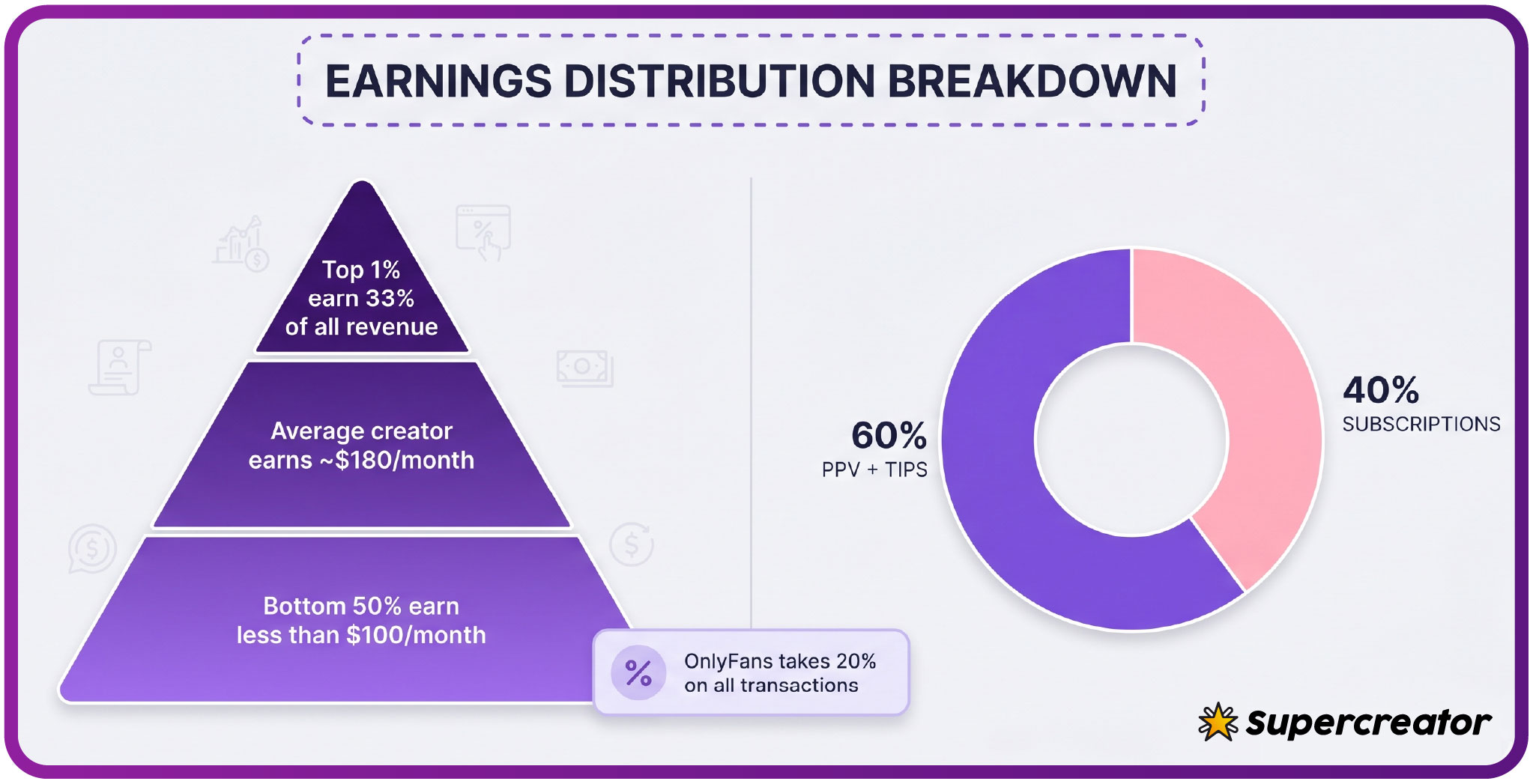
- Calculate the platform fee effect: 20% of everything goes to the platform, and the creator keeps 80%.
- Compare the six-month total against a single-month baseline multiplied by six.
The fee step is easy to skip and worth doing. If you spend $100 across subscriptions, PPV, and tips in a month, the creator receives $80 of it. Knowing your own figure is what makes the next correction decision concrete rather than vague.
Common Drift Patterns You Might See
Most six-month reviews surface the same handful of patterns. Recognizing them by name makes the correction step faster, because you already know which lever applies.
- More subscriptions than planned, usually added without removing any older page.
- Rising PPV message spending, often through small unlocks that never get totalled.
- Tip totals that grew gradually and were never reviewed individually.
- Promotional pricing that expired, so the same set of pages now costs more.
- Pages still renewing that were not opened in the last month.
- Duplicate subscriptions to similar pages that serve the same purpose.
- No review since month one, which hides all of the above at once.
Correcting Drift Without Cancelling Everything
The instinct after a bad six-month review is to cancel broadly. That usually fails, because it removes the parts you actually value along with the drift. A graduated correction holds better and keeps the review useful.
Start with the cheapest change and stop as soon as the number is back where you want it. Most people never need to reach the last step.
- Remove one page you have not opened in the last 30 days.
- Set a monthly PPV cap and track unlocks against it.
- Replace two similar subscriptions with the one you use more.
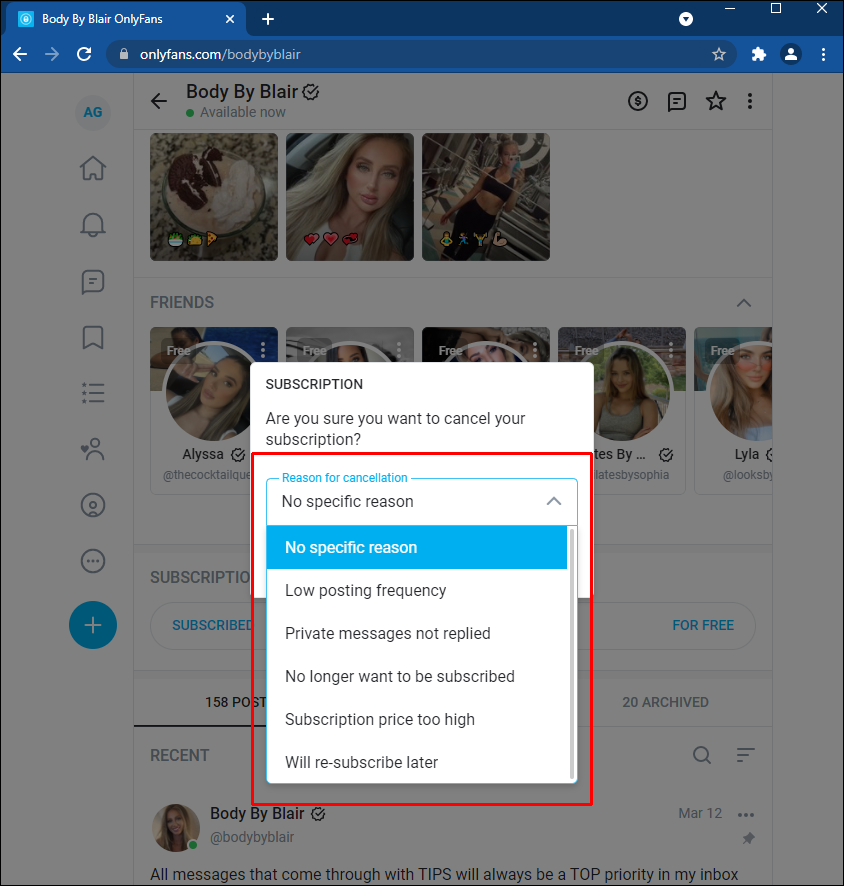
- Switch an undecided page to non-renewing and let the paid period end naturally.
- Turn off auto-renew on the lowest-value remaining subscription.
- Keep only the pages you would re-subscribe to today at the current price.
For context on how recurring charges accumulate generally, the same principles that apply to subscription audits elsewhere apply here: the total is what matters, and the total is invisible without a review. If a charge appears that you do not recognize, treat it as a security question rather than a budgeting one, and read up on phishing before entering payment details anywhere new.
On the discovery side, if you are rebuilding a smaller list deliberately, a curated reference such as best onlyfans verified can help you compare pages by stated price before committing. Check the page itself for the current rate, since listings can lag behind changes.
Setting the Next Checkpoint
A review that never gets scheduled does not happen. Choose the next checkpoint now, while the current numbers are in front of you, and write the date somewhere you will see it.
- Quarterly reviews, if the six-month total surprised you.
- A six-month review, if the numbers matched the baseline closely.
- A short monthly totals check with no full review.
- An immediate review after any price change or promotional period ending.
- A full re-baseline once a year, replacing the original snapshot.
Keep the format identical each time. A review that changes shape every cycle cannot be compared to the last one, and comparison is the entire point of placing checkpoints at month one, three, and six.

FAQ
Why do subscription budgets drift around six months?
Because nothing forces a review in between. Each charge is small enough to ignore individually, and additions arrive in small batches rather than as one decision. Six months is roughly when the accumulated total becomes noticeable by accident instead of by plan.
What should I record in my first month for later comparison?
Record each base price individually, whether each page is free or paid, total PPV spending with the number of unlocks, total tips, and every renewal date. Mark promotional pricing as temporary so it is not mistaken for the standard rate later.
How much drift is normal before I should adjust?
Any drift you did not intend is worth a look. A useful threshold is whether you would still choose each subscription today at its current price. If two or more pages fail that test, correct before the next cycle rather than waiting for the annual total.
Does the platform fee change how I track spending?
It does not change what you pay, but it changes what your spending represents. The platform takes 20% and the creator keeps 80%, so $100 in monthly spending delivers $80 to creators. Tracking your own gross figure keeps the correction steps concrete, since you are adjusting the number you actually control.