
Aviator Cash-Out Mistakes to Avoid
Aviator is a crash game by Spribe in which an increasing curve rises until the round crashes. The player must cash out before the crash to receive the current multiplier on the stake.
Cash-out mistakes usually involve timing, target selection, or connection delay. This guide explains manual timing, auto cash-out, target chasing, and the server window using the game’s published mechanics and numbers.
How Aviator Cash-Out Works
Aviator fixes the crash point before take-off through its provably fair system. The game publishes a SHA-256 hash of the server seed before each round, then reveals the inputs after the round for checking.
A cash-out request must reach the server before the crash. The operator or Spribe cannot change the result after the round starts, but a late request cannot create a cash-out after the crash.
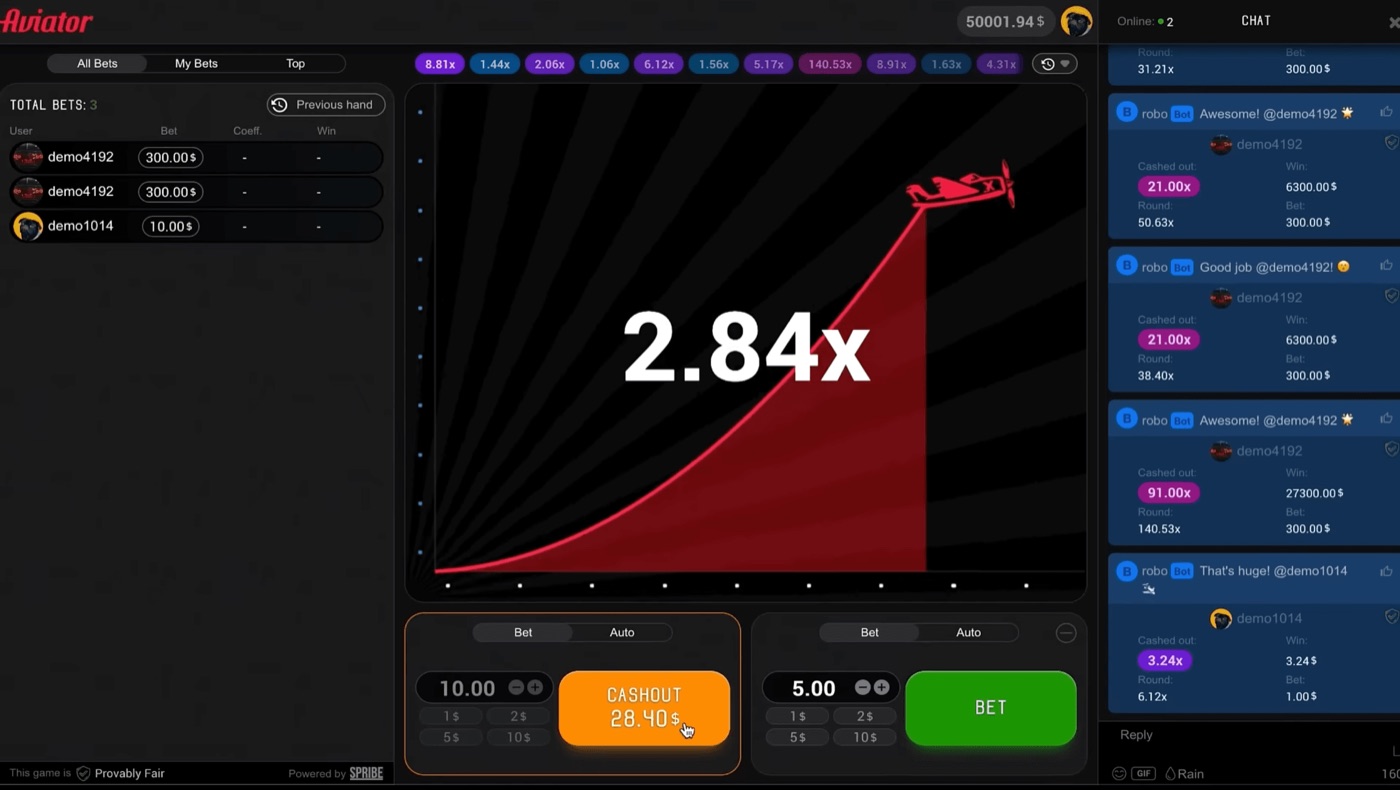
The Aviator interface shows live bets, chat and a cash-out at 28.40.
The multiplier applies to the stake when the server accepts the cash-out. For example, a $1 stake accepted at 2x returns $2 before any operator-specific terms that may apply.
- The round begins with the crash point already fixed.
- The multiplier rises during the flight.
- A manual or automatic request can cash out before the crash.
- An accepted request receives the multiplier shown at the accepted point.
- A request that arrives after the crash does not cash out the bet.
Aviator has two bet panels per round, and each panel can have a separate cash-out. This allows one stake to use manual timing while another uses an automatic setting, but the two requests still depend on the server receiving them before the crash.
| Cash-out point | Probability the round reaches it | Example return on $1 |
|---|---|---|
| 1.2x | 80.8% | $1.20 |
| 1.5x | 64.7% | $1.50 |
| 2x | 48.5% | $2.00 |
| 3x | 32.3% | $3.00 |
| 5x | 19.4% | $5.00 |
| 10x | 9.7% | $10.00 |
The probabilities follow the formula 0.97 divided by the target multiplier. Aviator has a 97% RTP and a 3% house edge, so the expected value is minus 3% of the stake at every cash-out target.
Manual Timing Errors
Manual cash-out uses the player’s click rather than a preset multiplier. Aviator rounds last about 8-30 seconds, so a player has a short period to observe the flight and act.
The displayed multiplier can keep rising while the click travels from the device to the server. A player who waits for a preferred number may therefore lose the bet when the round crashes first.
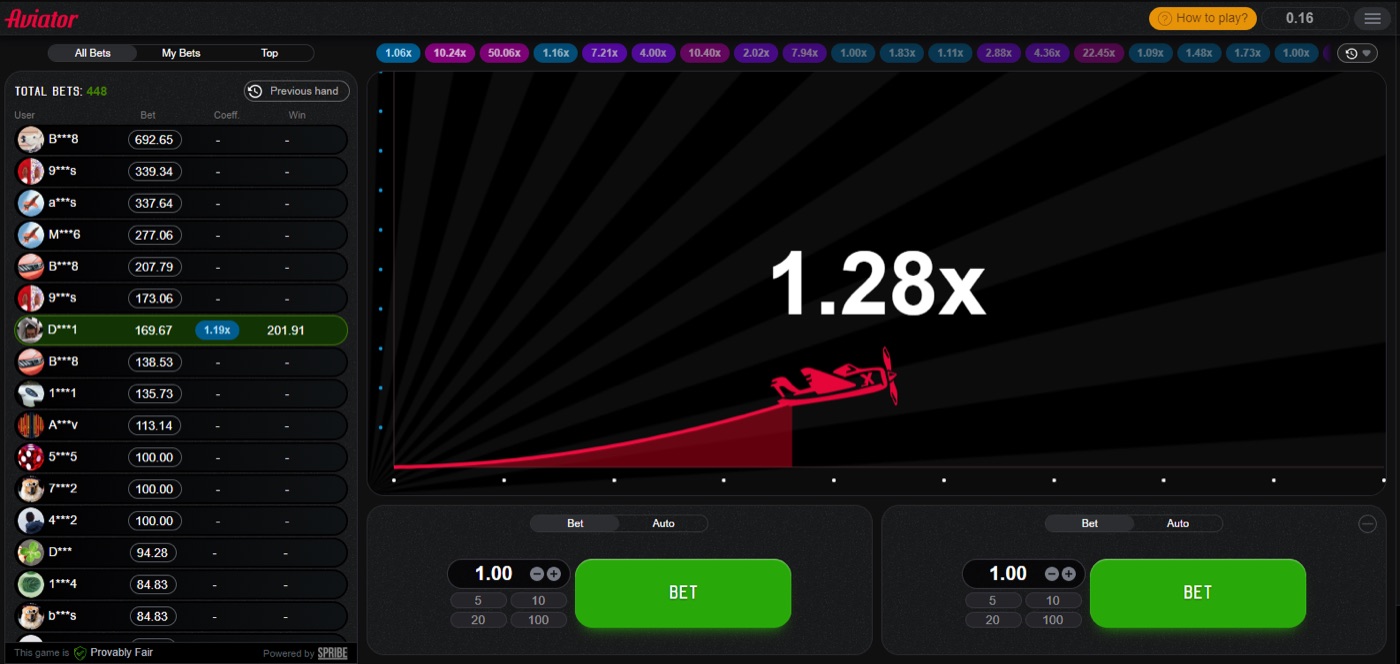
The plane in flight gives the player a short period for a manual cash-out.
Manual timing does not provide control over the crash point. It only controls when the player sends a cash-out request, and that request must arrive before the server records the crash.
- Choose the stake before the round starts.
- Watch the multiplier rather than waiting for a prediction.
- Click cash-out when the chosen exit point appears.
- Allow for device and connection delay instead of clicking at the last visible moment.
- Check whether the game records the cash-out as accepted.
A common mistake is treating the visual flight as a guarantee that another second is available. The game can crash at any point, including 1.00x, and about 3% of rounds crash instantly at that multiplier.
Manual play can also create a false sense of skill after several successful clicks. Rounds are independent, so earlier multipliers do not make the next multiplier more likely to reach a chosen number.
A player considering a cash-out on a bookmaker platform may see a crash game, multiplier, stake and cash-out controls together, as in aviator betway login. The link does not change how Aviator sends or accepts a cash-out request.
Auto Cash-Out Settings
Aviator’s Auto Cash-Out uses a preset multiplier instead of a manual click. The game also provides Auto Bet or Auto Play for 10-100 rounds, with stop-on-win and stop-on-loss controls.
An automatic setting does not remove the 3% house edge. It sends the cash-out instruction at the chosen multiplier, but the round must still reach that point and the request must reach the server before the crash.
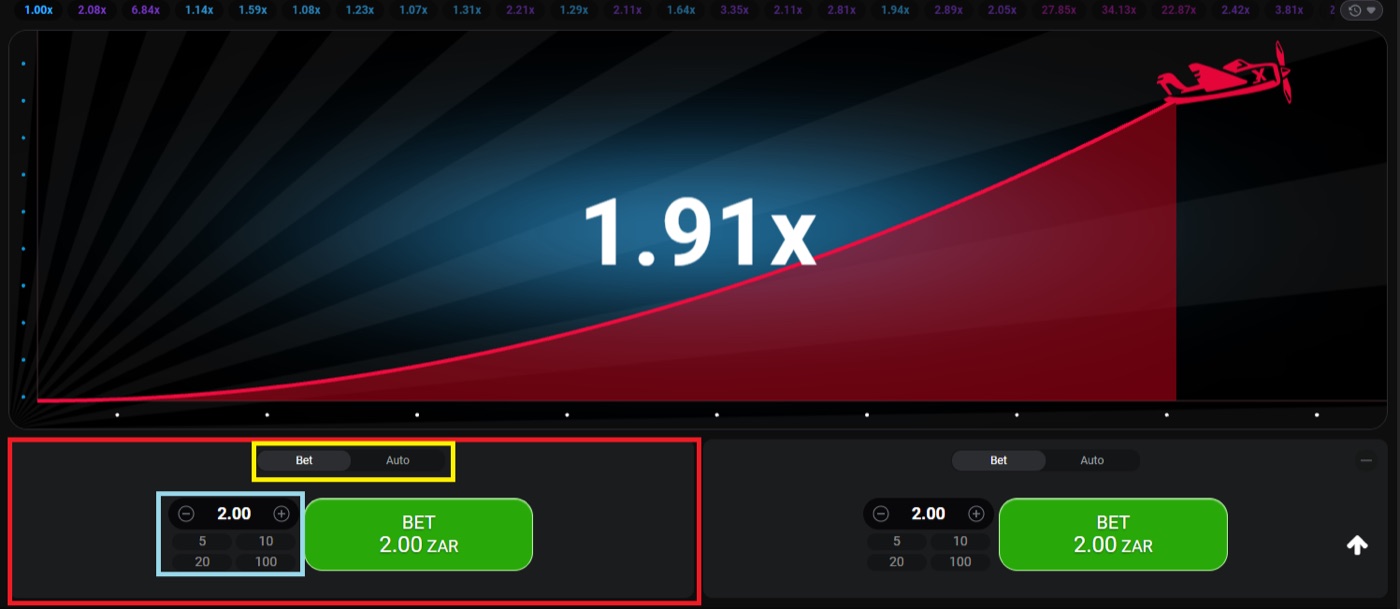
The desktop round shows 1.91x and two separate bet panels.
Auto cash-out can reduce hesitation, but it cannot make a low target certain. A 1.5x target is reached by about 64.7% of rounds, while a 2x target is reached by about 48.5%.
- Set the target before starting the round or sequence.
- Check that Auto Cash-Out is enabled on the intended bet panel.
- Confirm the stake and the number of Auto Play rounds.
- Use stop-on-win or stop-on-loss when those controls fit the planned session.
- Do not assume an automatic setting can cash out after an instant crash.
For example, a $2 stake with a 1.5x auto cash-out returns $3 when the round reaches 1.5x and the request is accepted. If the round crashes at 1.00x, the target is never reached and the stake is lost.
Auto Play can repeat a mistake across 10-100 rounds. A wrong target, an unsuitable stake, or an unplanned session can therefore affect many bets before the player notices.
Using two panels may split decisions, but it does not split the house edge. One panel can use a lower auto target and the other a higher target, yet each bet remains exposed to its own stake, multiplier and server timing.
Chasing a Target
Aviator’s probability falls as the target multiplier rises. The chance of reaching 5x is 19.4%, while the chance of reaching 10x is 9.7%.
Chasing a target means keeping a bet active because the player wants a particular number rather than following a defined exit point. This approach can turn an available cash-out into a complete loss when the crash arrives first.
- At 1.2x, the probability is 80.8%.
- At 1.5x, the probability is 64.7%.
- At 2x, the probability is 48.5%.
- At 3x, the probability is 32.3%.
- At 5x, the probability is 19.4%.
- At 10x, the probability is 9.7%.
Suppose a player stakes $1 and waits for 10x. A successful cash-out returns $10, but the round reaches 10x only about 9.7% of the time. The higher possible return comes with a lower probability, not with a stronger prediction.
The expected value remains minus 3% of the stake at every target. Choosing 1.5x rather than 10x changes the variance and the frequency of wins, but it does not remove the mathematical edge.
Previous results cannot justify a higher target. The round history displays earlier multipliers, but independent rounds do not form a pattern that changes the published probabilities.
- Do not raise the target because the previous round ended early.
- Do not lower the target only because several rounds reached high multipliers.
- Do not treat a graph, pattern or strategy chart as a probability tool.
- Do not increase the stake to recover a missed target.
Martingale creates another form of target chasing. It doubles the stake after each loss and reaches 1,024 times the base stake after 10 losses, while Fibonacci and D’Alembert systems also do not beat the 3% edge.
Missing the Server Window
Aviator accepts a cash-out only when the request reaches the server before the crash. Player complaints about cash-out time-outs are commonly explained by latency or a slow device.
The game supports desktop, tablet and mobile browsers, but the device and connection still affect how quickly a request travels. A visible button press is not the same as a confirmed server acceptance.
- The player presses the manual cash-out button, or the automatic rule sends a request.
- The request travels through the device and connection.
- The server checks whether the crash has already occurred.
- The game records the cash-out if the request arrived in time.
- The round settles without that cash-out if the crash came first.
Short rounds increase the importance of timing. With about 60-90 rounds per hour and only a few seconds between rounds, a player may move quickly from one decision to the next without checking whether the previous cash-out was recorded.
A slow device can also make the interface appear behind the server state. The practical response is not to search for a predictor, because the crash point is committed by hash before take-off and cannot be predicted from the screen.
- Use a stable connection when placing a manual cash-out.
- Avoid clicking at the exact last moment of a target.
- Check the recorded bet result after cashing out.
- Do not repeat a request blindly after a delay.
- Stop if the device or connection produces repeated time-outs.
Playing during a quieter period may make the connection feel smoother, but it does not improve the odds. The chances of reaching each multiplier remain the same because the rounds are independent.
Practical Cash-Out Habits
Aviator provides a demo mode that needs no registration. Demo play can show how the two bet panels, Bet and Auto tabs, cash-out controls and round history work before a player uses a stake.
Typical stakes range from about $0.10 to $100 per bet, but the available amount depends on the operator. A planned stake matters because a cash-out method cannot correct a bet that is too large for the player’s budget.
- Start with demo mode to practise the controls.
- Choose the stake before watching the multiplier.
- Set a clear cash-out point rather than changing it during flight.
- Use a stop-on-loss limit for repeated Auto Play rounds.
- Review the result before placing another bet.
Some guides suggest auto cash-out around 1.5x-2x, while other guides describe a two-bet split with one cash-out around 1.5x-2x and another aiming for 5x-10x. These are approaches described by guides, not guarantees or ways to remove the house edge.
A player can also set a loss and win limit before starting. A short responsible-gambling rule is simple: do not stake money needed for essential expenses.
| Mistake | What happens | Useful check |
|---|---|---|
| Waiting for a perfect manual number | The round crashes before the click arrives | Use a defined exit point |
| Setting an unrealistic auto target | The round often crashes before the target | Compare the target with its probability |
| Chasing a missed target | The player increases risk after a loss | Keep the original stake plan |
| Clicking during connection delay | The server receives the request after the crash | Check the recorded result |
| Running Auto Play without limits | A mistake repeats for 10-100 rounds | Use stop-on-win or stop-on-loss |
Aviator FAQ
Is manual cash-out better than auto cash-out?
Neither method removes Aviator’s 3% house edge. Manual cash-out depends on the player’s click, while auto cash-out sends a request at a preset multiplier; both need the round to reach the target and the server to receive the request before the crash.
Why did my Aviator cash-out time out?
A cash-out can time out when latency or a slow device causes the request to reach the server after the crash. The visible multiplier does not guarantee that the server accepted the request before the round ended.
Can I predict the next Aviator multiplier?
No method can predict the crash point. Aviator commits the crash point through a server-seed hash before take-off, and the rounds are independent.
What is a sensible way to use auto cash-out?
Choose the multiplier and stake before the round, check that Auto Cash-Out is active on the intended panel, and use stop-on-win or stop-on-loss for Auto Play. A 1.5x target is reached by about 64.7% of rounds, while a 2x target is reached by about 48.5%.
Does chasing 10x improve the return?
A 10x cash-out returns ten times the stake if accepted, but the round reaches 10x about 9.7% of the time. The expected value remains minus 3% of the stake, so the higher target increases variance rather than removing the edge.
Can a player avoid every instant crash?
No. About 3% of rounds crash instantly at 1.00x. An auto setting, manual click, or target plan cannot cash out a round that ends before the request is accepted.